
Shipping & Export · 31 Jul 2026
Who Carries the Risk When You Ship a Car Out of Japan?
Shipping cars out of Japan: where the risk actually sits.
A briefing for dealers, importers and fleet buyers on Incoterms, marine cargo cover and chain of custody — from a team that has been exporting out of Japan since 2009.
Most buyers compare Japanese exporters on a single number: the quote. It is a poor proxy for what is actually being purchased. What you are buying is custody of a high-value asset across four to eight weeks, several physical handovers, an ocean, and one of the most volatile operating climates in the developed world.
Smile JV has been moving vehicles out of Japan since 2009. This is how we think about risk on that journey, and how our insurance is structured to match it.
Japan Is a Demanding Operating Environment
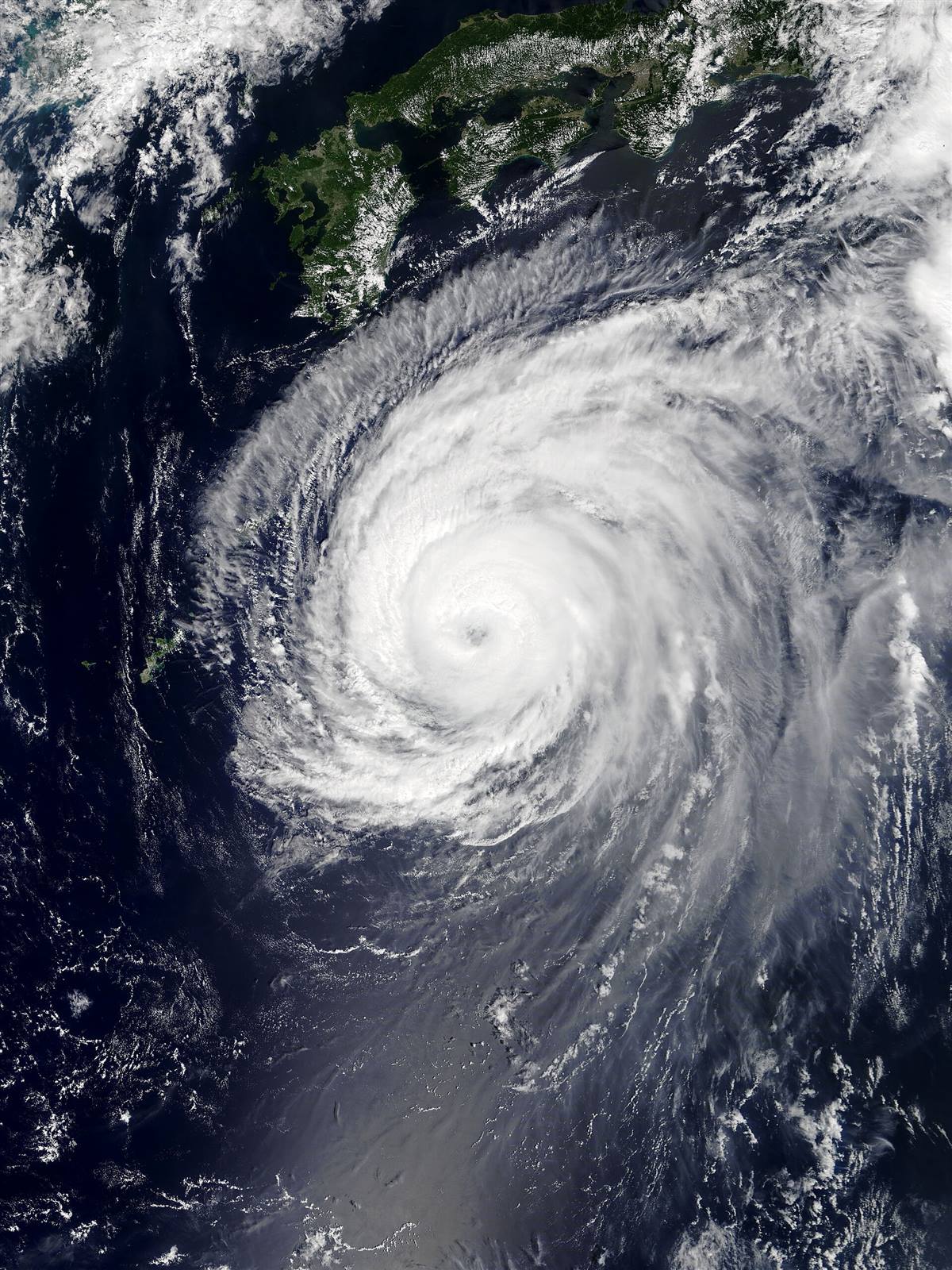
Japan's climate is not a seasonal inconvenience. It is a permanent variable in the logistics plan, and it runs almost year-round.
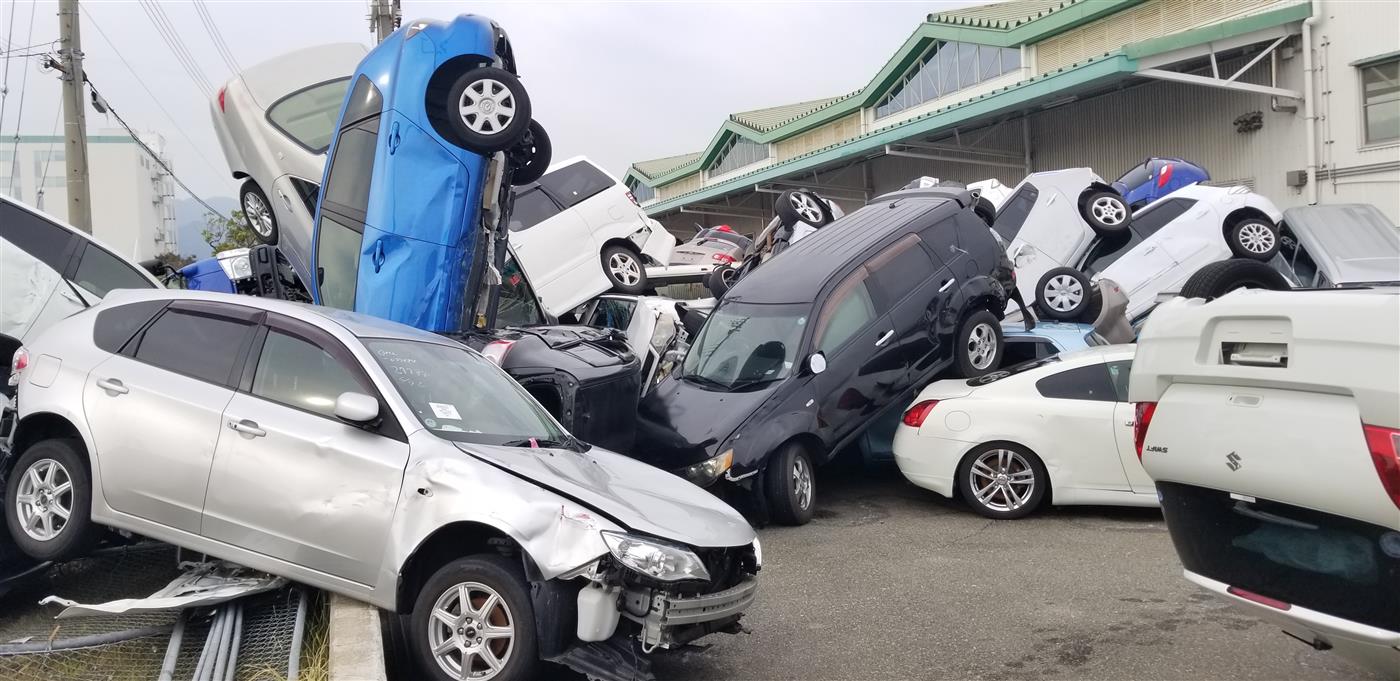
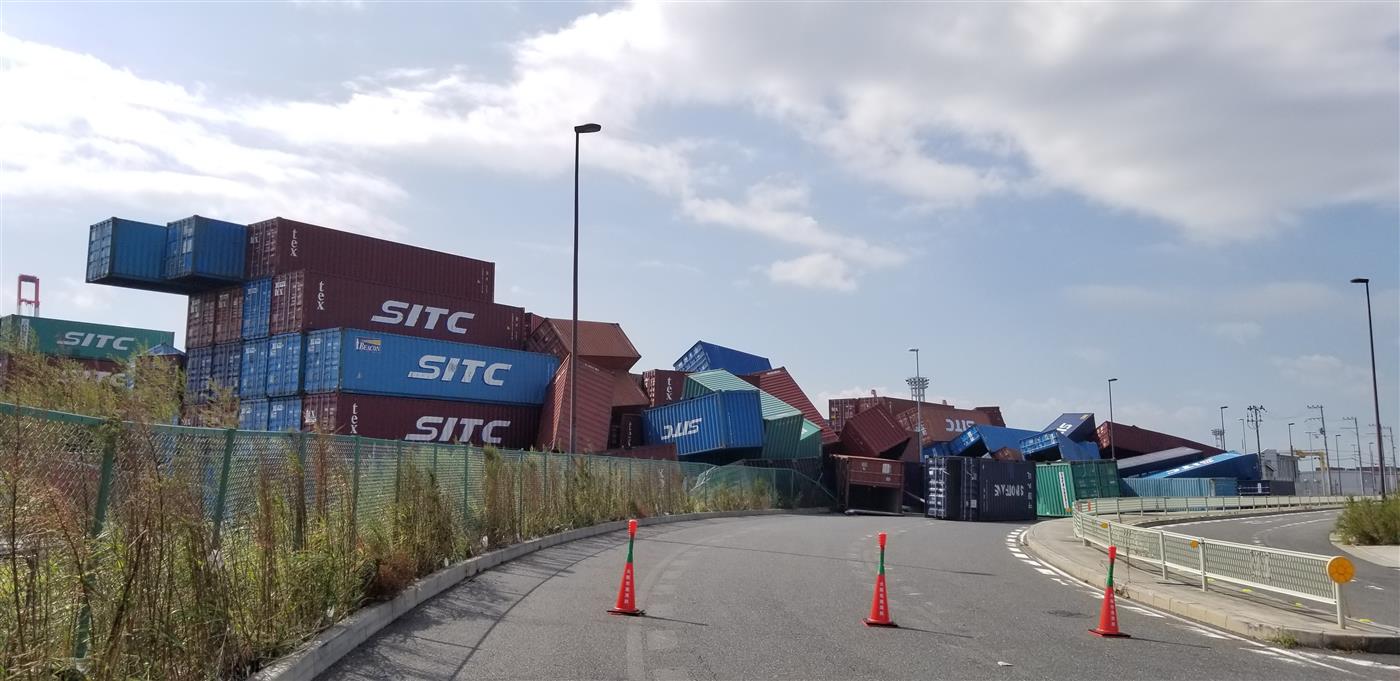
- Typhoon season (May–October, peaking September– October). Coastal port yards face high winds, flying debris, storm surge and saltwater flooding. Multiple systems can arrive inside the same fortnight.
- Tsuyu, the rainy season (June–July). Weeks of sustained damp. Vehicles held in unsurfaced open lots face interior moisture and mould risk, and mud that stalls inland trucking.
- The Akisame autumn rain front (September). When a late typhoon feeds moisture into this front, the result is heavy rainfall, landslides and road closures on the routes between auction houses and the ports.
- Winter snow (December–February). Siberian air masses bury the Sea of Japan coast. Collection routes close with little notice, including in cities that rarely see snow.
None of this is unusual. It is simply the environment — and it needs to be planned around rather than reacted to.
Who Is Actually Handling Your Vehicle
Here is a question that is almost never asked at quotation stage: does the company you are buying from hold its own auction account?
A great many do not. They are agents standing in front of other agents — a newer exporter takes your order and passes the entire job to another exporter or auction agent, who does the actual work: bidding, inland transport, booking the vessel, customs. We should be straight about this rather than sneer at it. Smile JV operated that way in our own early years. Running the whole chain yourself takes real resources, and very few companies begin with them.
But you should know which model you are buying, because the difference does not show up on the invoice. It shows up under pressure. Four functions have to be staffed and managed to control a vehicle end to end: bidding on your own auction account, inland transport from the auction house, booking space directly with the shipping lines, and customs and storage through the freight forwarders. Handing all four to one outside company is far less work — and it removes you from every decision that determines whether the vehicle moves on schedule and arrives intact.
Three failures we saw for ourselves before bringing the chain in-house. No certainty that a policy had been put in place at the right moment — and because pre-loading cover is time-bound, that is the difference between a claim and no claim. No reliable sight of the next sailing or of schedule changes, so a missed vessel meant weeks of extra storage in open ground, often in typhoon season. And no direct relationship with the line, which puts you last in the queue for space and blind to what is happening to your cargo. Each of those is invisible to the customer until it has already cost them.
To be equally clear about our own model: we use contractors. Inland transport is contracted out; freight forwarders handle customs and storage. Nobody owns every truck and every bonded warehouse in Japan. The distinction that matters is that we contract them directly — there are not two or three companies sitting between us and the people physically touching your vehicle. We hold our own auction account and bid on it, we book with the lines ourselves, we instruct the forwarders ourselves, and our own IT systems record each step as it happens.
Which is why, when you ask where a vehicle is, the answer comes from our records rather than from a phone call passed down a chain.
Know Where Risk Transfers Before You Agree an Incoterm
This is where most disputes actually begin. The shipping term you agree determines who carries the loss, and it is worth being explicit at quotation stage. We work on three:
- EXW (Ex Works) / Freight Collect. No cover from us. Risk sits with the buyer or their agent from the moment the vehicle leaves the auction house. We do not release vehicles under EXW until payment has cleared, precisely because the goods are travelling uninsured. Late auction pick-up fees may also apply.
- C&I (Cost and Insurance) / Freight Collect. We arrange marine cargo cover; you arrange the freight.
- CIF (Cost, Insurance and Freight) / Freight Prepaid. We arrange both.
You will notice a term missing from that list. Its absence is deliberate, and it is probably the most useful thing in this article.
Why We Will Not Quote FOB as a Risk Term
Under FOB, risk passes to the buyer when the goods are placed on board the vessel. Clean on paper. In practice it asks the exporter to carry the vehicle through the one stretch of the journey that no transit policy will cover on its own.
Here is the mechanic that most people in this trade have never had explained to them. Marine cargo insurance is a transit product. It attaches to a voyage. There is no marine policy available to us that covers a vehicle only while it sits in Japan waiting for a ship — that product does not exist. (A yard or warehouse policy can cover a car while it stands on the insured premises — but it attaches to the premises, not to your car, and it stops the moment the vehicle moves; more on that below.) The single mechanism that puts cover on the car itself — cover that names the vehicle and follows it from the auction house, on the truck, and through the yards — is a marine cargo policy with a before-loading storage clause attached to it. The storage cover is an extension of the voyage cover. Remove the voyage and there is nothing for it to attach to.
So FOB asks us to hold risk across exactly the window that no standalone transit product will insure. Rather than pretend otherwise, we offer two honest positions: EXW, where we tell you plainly that there is no cover and the risk is yours from the auction house; or C&I / CIF, where the vehicle sits under ICC(A) with the 90-day Before Loading Clause running from the moment it reaches storage.
The "FOB Fee" Question — and Why We Do Not Use the Term
You will constantly see, and be asked for, an "FOB fee." It is standard shorthand across this trade. It is usually meant innocently: most people using it inherited the phrase from whoever trained them and have never had cause to take it apart.
Take it apart anyway, because it is two different things welded together. A fee is a charge for work. FOB is a statement about where risk transfers. Putting them in the same phrase quietly implies that the exporter is carrying the vehicle right up to the moment it goes on board — an implication that, in our experience, very few of the people saying it have actually thought through, and fewer still have insured.
So if you are quoted an FOB fee, ask the follow-up:
"Before the vessel is even booked, while my car is sitting in a yard or at the port in Japan — who is carrying the risk, and under what policy?"
That one question separates the exporters who have worked this through from the ones repeating a phrase. If the answer is vague, or is some version of "it's covered," press for the clause name and the period it runs for.
We call ours a buying fee. Some exporters call it an export fee or a service fee, which is equally fine. What it is not is a risk position. It is our charge for sourcing, bidding on, purchasing and preparing the vehicle for export — a fee for work performed, nothing more. We keep it separate from the Incoterm deliberately, because the pre-loading window that "FOB fee" appears to speak for is exactly the window no standalone transit policy will insure. Where risk actually passes is set by the term we agree with you — EXW, C&I or CIF — and it is stated separately, in writing, every time.
None of which stops FOB being used perfectly legitimately as an invoice valuation term — in fact, customs authorities largely require it. Japan Customs takes export declarations on an FOB basis, and many importing countries assess duty on the FOB value too: what they want is the price of the goods themselves, without the international freight and insurance stacked on top. So nearly every shipment generates official paperwork with "FOB" written on it — which is almost certainly where the confusion started, and why the word has bled into everyday trade talk as if it described who carries the risk. If FOB appears on a Smile JV document, it means what customs mean by it: valuation. It never describes where risk of loss or damage passes. An invoice value and a risk position are two separate questions, and they deserve to be asked separately on every shipment.
What the Policy Actually Covers
Vehicles shipped on C&I or CIF terms are covered under an "All Risks" marine cargo policy underwritten by Mitsui Sumitomo Insurance Company, Limited, on Institute Cargo Clauses (A) — the broadest of the three standard clause sets.
- Transit scope. Cover runs from the auction house (or from our own yard, on stock vehicles) through to the consignee address shown on the invoice.
- Before Loading Clause — 90 days. The vehicle stays insured while held at intermediate storage in Japan for up to 90 days from delivery to that storage. This is the clause that matters during storm season, and it is the one that minimum-cost quotes tend to leave out.
- Drive Away Clause. The vehicle remains covered for physical damage while being driven under its own power, or under tow, to the final destination.
- General Average. You are protected against a general average contribution where a vessel emergency requires cargo to be sacrificed for the safety of the ship.
- Liability limits per accident. ¥20,000,000 in open storage; ¥40,000,000 inside an appropriate warehouse.
The full cover, exclusions and claims procedure are set out on our Shipping Insurance page.
Minimum-Cost Cover Versus the Smile JV Standard
| Consideration | Minimum-cost cover | Smile JV standard |
|---|---|---|
| Clause set | Typically ICC (C) — named perils, major casualty events only | ICC (A) — All Risks, subject to stated exclusions |
| Pre-loading storage in Japan | Commonly no storage extension | 90-day Before Loading Clause |
| Storm damage in the yard before loading | Frequently uninsured | Covered, within policy limits |
| Final leg to your address | Often ends at port | Drive Away Clause to the consignee address |
If a typhoon floods a holding yard before the vehicle is loaded, the difference between those two columns is the difference between a claim and a total write-off carried by you.
What It Does Not Cover
We would rather you knew this at quotation than at claim. An All Risks policy is not an unlimited policy.
- Excess. Claims for breaking, bending or denting carry a deductible of 3% of the insured value of the damaged goods, or ¥100,000 — whichever is higher.
- Excluded damage types. Scratching, rust, oxidation and discolouration are not covered.
- Inventory shortages. Unexplained missing items are not covered.
- Seismic events during pre-loading storage. During the before-loading period in Japan, loss or damage caused directly or indirectly by earthquake, volcanic eruption or tidal wave — including fire arising from those events — is excluded. Wind and flood damage from typhoons during that period is covered; seismic events are not.
- War and terrorism. War risks follow the Institute War Clauses and generally terminate on discharge from the vessel. Acts of terrorism, and acts committed from political, ideological or religious motive, are excluded during the storage and distribution period.
- Regional flood exclusions. Flood damage is excluded where cargo is located in the Netherlands or Thailand.
- Vehicle only. The policy covers the vehicle. It does not extend to third-party liability, personal injury, or damage to any other property.
Read the Terms of Trade — Especially for What Is Missing
Before you place a bid with anybody, read their trading terms. Then read them a second time for what is not there.
Across this trade, terms of trade have settled into a familiar shape. They will cover deposits and how they are refunded. Bid cancellation windows and the penalty if you miss them. Storage fees after the first month. Commission structure. Who is responsible if an auction sheet is mistranslated. And then a list of claims that will not be accepted: vehicles over 100,000 km, rust on cars more than ten years old, modified or aftermarket vehicles, low-grade and ungraded cars.
Every one of those clauses is about the condition of the car you bought, or about who pays which fee. Both are worth having. But look at what that familiar shape routinely leaves out. In our experience it is common to find no clause at all covering:
- Risk of loss or damage between the auction house and loading — who carries it, and on what basis.
- Insurance. In a good number of trading terms the word does not appear anywhere. That does not necessarily mean no cover exists — some exporters hold policies of other kinds, most commonly a warehouse or premises policy covering vehicles while they are stored on site. But cover that is not written into the terms you are agreeing to is cover you cannot see, cannot size, and cannot rely on. Ask what it is, and read the next section before you take comfort from the answer.
- Force majeure. What actually happens when a typhoon, an earthquake or a port closure interrupts the job.
- Limitation of liability. Any cap at all, in either direction.
- Governing law and forum. Whose law applies, and where a dispute would physically be heard.
There is one pattern in particular worth pausing on. Terms will frequently set out in careful detail who pays storage beyond the first month — listing shipping delays, container shortages and port congestion among the causes. So the document has plainly contemplated a vehicle standing in a yard for weeks on end. It has thought about that window closely enough to bill for it. And then it says nothing whatsoever about who carries the loss if something happens to the car during exactly that period.
Silence is not reassurance. It means that on the day it matters there is nothing written down to point at, and you are relying on an unstated Incoterms default against a counterparty whose insurance position you have never asked about and cannot see from the outside.
A Warehouse Policy Is Not the Same Thing as Cover on Your Car
Ask about insurance and you will sometimes be told that the yard or warehouse is insured. That is genuinely better than nothing, and worth knowing. But it answers a different question from the one you asked, and there are two things to establish before you rely on it.
1. What is the limit, and how much stock is standing under it?
A premises policy is written with a maximum payable per incident. It attaches to the building and its contents as a whole — not to each car individually. So the useful question is not "is the warehouse insured?" It is: what is the limit per incident, and what is the total value of vehicles normally held there?
Those two numbers are worth putting side by side, because a yard holding several times its policy limit in stock is not covered in the way the word "insured" suggests. If an event took out the whole building, the limit is what gets shared out — it does not stretch to make every owner whole. It is a fair question to ask, and a reasonable exporter will not mind answering it. Ours are set out above: on the marine policy that covers your vehicle, ¥20,000,000 per accident in open storage and ¥40,000,000 inside an appropriate warehouse. Ask us the same question you would ask anyone else.
2. Will anyone insure your car at all?
At the top of the market, insurability stops being a formality. We learned this on a turquoise Nissan Skyline R33 400R — at the time one of the most expensive Skylines ever sold, and a substantial multiple of the last comparable car to change hands. Its value moved between roughly ¥80,000,000 and ¥160,000,000 over the course of a single year, which is precisely why we quote a range rather than a figure.
Mitsui Sumitomo would not insure it. Nor would several other underwriters we approached. The reason was not the route, the season or the condition of the car. It was that nobody could value it with sufficient confidence to write a policy against it, and an insurer will not take a risk it cannot price. That is not a failing of any one underwriter — it is a limit of the market itself.
If you are buying at that level, establish insurability before you bid, not after you have won. An exporter who has been here before will tell you straight away that this is a conversation to have with the underwriter first. An exporter who has not will tell you it is covered.
Six Questions to Put to Any Exporter — Including Us
If a company cannot answer these in writing, that is itself the answer.
- Do you hold your own auction account, or are you instructing another exporter to do the work?
- Under the term you are quoting me, who carries risk of loss or damage before the vehicle is loaded?
- Is that period insured — under which policy, which clause, and running for how long?
- If you are relying on a warehouse or premises policy, what is the limit per incident, and what value of stock is normally held there?
- What does your force majeure clause cover, and what does it exclude?
- Which country's law governs our contract, and where would a dispute be heard?
Our answers to the first four are set out above and stated on every invoice: our own auction account; risk allocated by the Incoterm we agree with you in writing; on C&I or CIF, ICC(A) with the 90-day Before Loading Clause, named rather than implied; and the per-accident limits published in full rather than left to be discovered at claim. On the last two: our Terms and Conditions carry an express force majeure clause — covering typhoons and other storms, earthquakes and tsunamis, fire, flood, port closures, carrier delays and cancellations, and customs or government action, with prompt notification and additional costs discussed before they are incurred wherever practical — and our contracts are governed by Japanese law, with claims heard in the Kyoto courts. Both are written down, not implied.
Claims Are Won or Lost in the First Three Days
Cover is time-sensitive, and in our experience most declined claims fail on procedure rather than on substance. Build these steps into your receiving process and brief whoever signs for the vehicle.
- 60 days. Under standard ICC(A) terms, cover expires 60 days after the vehicle is discharged from the vessel — whether or not it has reached its final address.
- Inspect before the driver leaves. Check the vehicle and all seals on arrival. Any visible damage must be recorded on the Bill of Lading or delivery receipt at that moment.
- 3 days for hidden damage. Damage not visible at delivery must be notified to the carrier in writing within three days of taking delivery.
- Photograph immediately. Clear, dated images of the damage and of the vehicle as received.
- Submit the file. Original policy or certificate, Bill of Lading, commercial invoice and survey report, to the nearest Mitsui Sumitomo agent.
This is the highest-return control in the entire chain, and it costs nothing to implement.
Why This Is Worth Paying For
Comprehensive cover, a 90-day pre-loading extension and a directly managed supply chain cost more than the bare minimum. They also mean that when a port closes for a week, your vehicle is in a known location, under a policy that responds, handled by a team that answers to you rather than to a subcontractor two steps removed.
Seventeen years of doing this in Japan has taught us that the cheap quote and the expensive outcome are frequently the same transaction.
Talk to us before your next auction round. We will map the risk position of your shipment against the Incoterm and the level of cover your business actually needs — in writing, before you bid.
This summary is provided for information only. All cover is subject to the full terms, conditions and exclusions of the master policy. Notwithstanding anything to the contrary, English law and practice shall apply to the interpretation of policy terms, liability and the settlement of any and all insurance claims.
Frequently Asked Questions
Why won't Smile JV quote FOB as a risk term?
FOB asks the exporter to carry the vehicle through the pre-loading window that no standalone transit policy will insure. Marine cover attaches to a voyage — so we quote EXW (no cover, stated plainly) or C&I / CIF, where the Before Loading Clause applies.
What does marine cargo insurance cover on a car from Japan?
C&I and CIF shipments carry All Risks ICC(A) cover from the auction house to the consignee address, including a 90-day Before Loading Clause, a Drive Away Clause and General Average protection — ¥20M per accident in open storage, ¥40M warehoused.
Is a warehouse policy the same as insurance on your car?
No. A premises policy attaches to the building, with one per-incident limit shared across all stock, and it stops the moment the vehicle moves. A yard holding several times its limit in stock is not covered the way "insured" suggests.
What should you do if your imported car arrives damaged?
Inspect before the driver leaves and record visible damage on the Bill of Lading at that moment. Hidden damage must be notified to the carrier in writing within three days, and cover expires 60 days after discharge — most declined claims fail on procedure.
What is an "FOB fee"?
Trade shorthand that welds together a fee (a charge for work) and FOB (a statement about where risk transfers). On our documents FOB is only ever a customs valuation term — where risk passes is set separately, in writing, by the agreed Incoterm.
Questions about buying and exporting from Japan? Contact us.