
Auctions · 6 Oct 2026
Well, Just How Easy Is It? Japan's Car Auction Groups
USS, TAA, JU, ZIP and the rest: who runs Japan's 123 car auctions, and why it matters where you buy.
By Samini
If you are new to buying a used car from Japan, you might assume it involves pointing at a Skyline GT-R, handing over a briefcase of yen and driving it straight onto a ship.
It doesn't. Not even close. It is, in fact, a complicated bureaucratic maze.
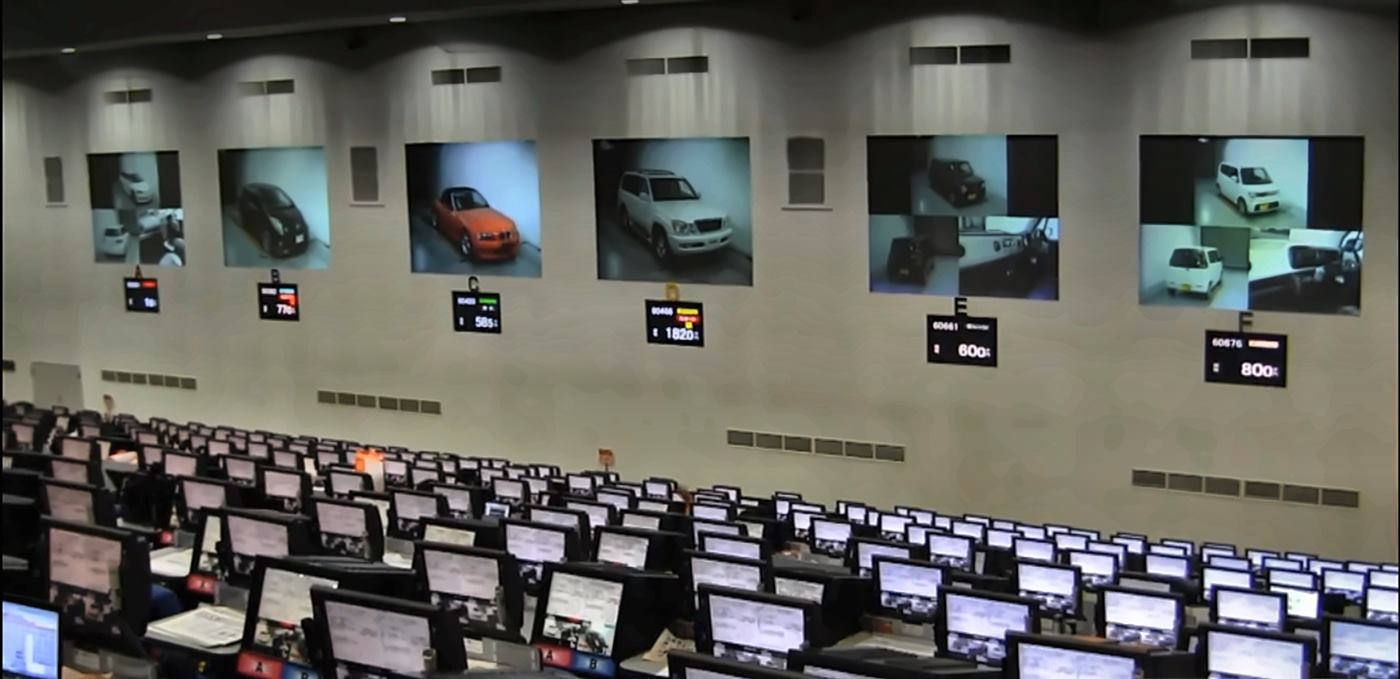
Japan's car auctions are a highly organised, strictly regulated business-to-business system. To step inside an auction hall at all, you need a Kobutsu-sho (a second-hand goods dealer licence) issued by the police. Anyone can apply for one, but auction membership is much harder to get. You typically need a registered Japanese business, a residence visa, commercial space to store cars, a clean record and a guarantor, often a Japanese citizen prepared to put their own house up as security. That rules most people out.
You, sitting at home, cannot just log on and bid. You need an exporter: someone on the inside. And this isn't one giant company. It is a network of auction groups, each with its own quirks and rules.
Japan's Auction Groups at a Glance
Japan has 123 used-car auction venues. This is how they break down by group, using 2024 consignment figures shown as weekly averages.
| Auction group | Venues | Cars a week | Share |
|---|---|---|---|
| USS | 19 | 59,860 | 41% |
| JU | 41 | 25,760 | 18% |
| TAA (Toyota) | 16 | 19,340 | 13% |
| CAA | 4 | 8,290 | 6% |
| Arai | 8 | 8,140 | 6% |
| MIRIVE | 3 | 5,740 | 4% |
| KCAA | 4 | 3,850 | 3% |
| Honda AA | 6 | 3,670 | 3% |
| LAA | 2 | 2,890 | 2% |
| NAA (Nissan) | 7 | 2,390 | 2% |
| Others (IMA, BAYAUC, ZIP, Suzuki AA and independents) | 13 | 5,910 | 4% |
| All auction groups | 123 | about 145,800 | 100% |
HAA Kobe and JAA are counted with USS, which now owns them. TAA's 16 include five smaller satellite sites. Shares are rounded, so they add up to slightly more than 100%. One venue has no published figure.
Japan's ten busiest auction venues
- USS TokyoThu · Chiba14,890now up to 20,000
- USS NagoyaFri · Aichi9,190now up to 16,000–17,000
- HAA KobeSat · Hyogo5,740now up to about 6,500
- USS YokohamaTue · Kanagawa4,520
- USS KyushuSat · Saga4,460
- JU Gifu HashimaSat · Gifu4,420
- Arai VanTraSat · Tochigi4,410
- CAA ChubuWed · Aichi4,160
- USS OsakaFri · Osaka3,950
- JU AichiThu · Aichi3,360
Show as a table
| Venue | Group | Prefecture | Auction day | Cars a week (2024) |
|---|---|---|---|---|
| USS Tokyo | USS | Chiba | Thursday | 14,890now up to 20,000 |
| USS Nagoya | USS | Aichi | Friday | 9,190now up to 16,000–17,000 |
| HAA Kobe | USS | Hyogo | Saturday | 5,740now up to about 6,500 |
| USS Yokohama | USS | Kanagawa | Tuesday | 4,520 |
| USS Kyushu | USS | Saga | Saturday | 4,460 |
| JU Gifu Hashima | JU | Gifu | Saturday | 4,420 |
| Arai VanTra | Arai | Tochigi | Saturday | 4,410 |
| CAA Chubu | CAA | Aichi | Wednesday | 4,160 |
| USS Osaka | USS | Osaka | Friday | 3,950 |
| JU Aichi | JU | Aichi | Thursday | 3,360 |
Venue list and 2024 consignment figures: Goo-net Auto Distribution (goonews.jp), shown as weekly averages. Current figures for USS Tokyo, USS Nagoya and HAA Kobe are our own, from attending every week.
The Absolute Behemoth: USS
Take USS. It is the absolute behemoth, the largest and best-known of Japan's car auction groups. It handles about 41 percent of all the cars sold at Japanese auctions and runs 19 venues across the country, from USS Sapporo in the snowy north down to USS Kyushu.
USS Tokyo (which is actually in Noda, Chiba, along with most of the best places with "Tokyo" in their name, like Tokyo Auto Salon, Tokyo Disneyland and Narita airport) puts up to 20,000 cars through its lanes in a single auction day. USS Nagoya now handles up to 16,000–17,000. Want a $500 Suzuki Wagon R that smells a little funny? They've got it. Want a multi-million-dollar Ferrari F40? They've got that too.
If you have something truly special or European to sell, USS Tokyo and USS Nagoya are where you send it, because that is where the serious buyers with deep pockets are watching. USS grading is widely seen as the industry standard: not ruthlessly strict, but generally fair. Then there are its adopted children, like JAA, which used to be a big independent rival until USS bought it, and HAA Kobe, now part of USS too.
You will also see a huge amount of stock from big dealer groups like Gulliver and GTNET. They pioneered buying cars directly from the public, who can't sell at these dealer-only auctions themselves, and selling them on at auction, often within days. Between them, they put a staggering number of cars through the USS lanes, so a big share of what you bid on is fast-moving dealer stock.
Saturday Bargains and the European Specialists
If you want a genuine bargain, look to the weekend. Auctions like USS Kyushu, USS Okayama and HAA Kobe run on a Saturday. Because it's the weekend, a big part of the global market is offline or asleep. Add the fact that Tokyo-based exporters don't want to pay heavy inland transport costs to bring a car up from the south and west, and you have a recipe for serious buys. (I once bought an Alfa Romeo 155 Q4 in Hiroshima for ¥500,000, simply because no one else wanted to pay the transport.)
HAA Kobe is one of the auctions our own staff attend in person, every Saturday, so we see these weekend opportunities first-hand.
Speaking of European bargains, we must mention ZIP, an auction that specialises in imported cars. Since 2020 it has been part of the Yanase group, Japan's famous importer of European luxury cars, Mercedes-Benz and Audi in particular, along with American names like Cadillac and Corvette. Because of this connection, ZIP is a hotspot for high-end European and American stock and ex-dealer trade-ins. A word of warning, though: ZIP also sells cars without a grade. In our experience, when we look closely at ungraded cars, many turn out to have repair history that would earn an R grade, or wavy, resprayed paintwork. We suspect some sellers choose the ungraded category for exactly that reason. So treat an ungraded car with extra care, and get it inspected before you bid.
Strict Grading: The Manufacturer Auctions
When you buy a car over the internet without seeing it, you rely on the auction house's inspection sheet. For those who appreciate precision, look to the manufacturer-affiliated auctions: TAA (Toyota Auto Auction), Honda AA and NAA (Nissan Auto Auction).
These aren't single locations. They are nationwide networks, and TAA alone runs 11 main venues, plus five smaller satellite sites. You might assume a Toyota auction only sells Toyotas. It doesn't. When a customer buys a new Corolla and trades in their old Nissan, the dealer sends that Nissan straight to TAA.
Exporters love these auctions because their grading is strict. In our experience, a Grade 4 at TAA tends to be a better car than a Grade 4 at some smaller independent halls. They are trusted enough that some Japanese dealers buy a car at TAA, take it to a smaller auction and sell it again for a profit, because the grading there is looser. (New to grades? See auction grades explained.)
Online Networks and "One-Price" Cars
Then there are the dealer-to-dealer online networks. Some aren't physical auction yards at all. The cars stay at dealerships around the country, inspectors check them on site, and bidding is done entirely online.
Through these networks you will also find "One-Price" cars. Instead of a fast-paced bidding war, these are fixed-price dealer cars sold at wholesale prices. For first-time buyers who find auctions daunting, a One-Price car is a simpler way to know exactly what you are paying up front. More about fixed and one-price dealer cars.
Commercial Vehicles and the Regional Halls
If you're after something terribly sensible, like a delivery van or a big yellow excavator, you go to Arai. It is best known for commercial vehicles and heavy machinery.
Then there are the big regional groups: MIRIVE, CAA, BAYAUC, KCAA, LAA and JU, the auctions run by Japan's used car dealer associations, with 41 venues of their own.
Buying from regional halls is a classic game of risk and reward. Because they are further out, inland transport costs more, which puts off a lot of Tokyo exporters. Fewer eyes mean cars can slip under the radar at bargain prices. But in our experience, regional grading can be generous: a car that earns a Grade 5 at a small country auction might only get a Grade 4 at USS. That makes an inspection even more important. At most regional halls it is done by the auction house's own contractors, often by phone, so ask exactly what kind of inspection is possible before you bid. Our auction map shows who inspects where.
Why Look Anywhere Else?
If TAA is the safest and USS has all the cars, why bother looking anywhere else? Three reasons:
- Money. A Supra might cost a fortune at USS Tokyo, because every exporter on earth is watching it. The same car might slip under the radar at a small JU auction in the mountains.
- Geography. Japan is long and covered in mountains. If you buy a car at USS Sapporo in the frozen north but your ship leaves from Yokohama, the transport costs will hurt. A smart exporter searches every network for a car near the port.
- Specifics. If you want a very specific trim level or rare option, you have to search all of them to find the only one for sale that week.
Our auction map shows how spread out they are: all 123 venues, who runs each one, who inspects there, and which areas get heavy snow.
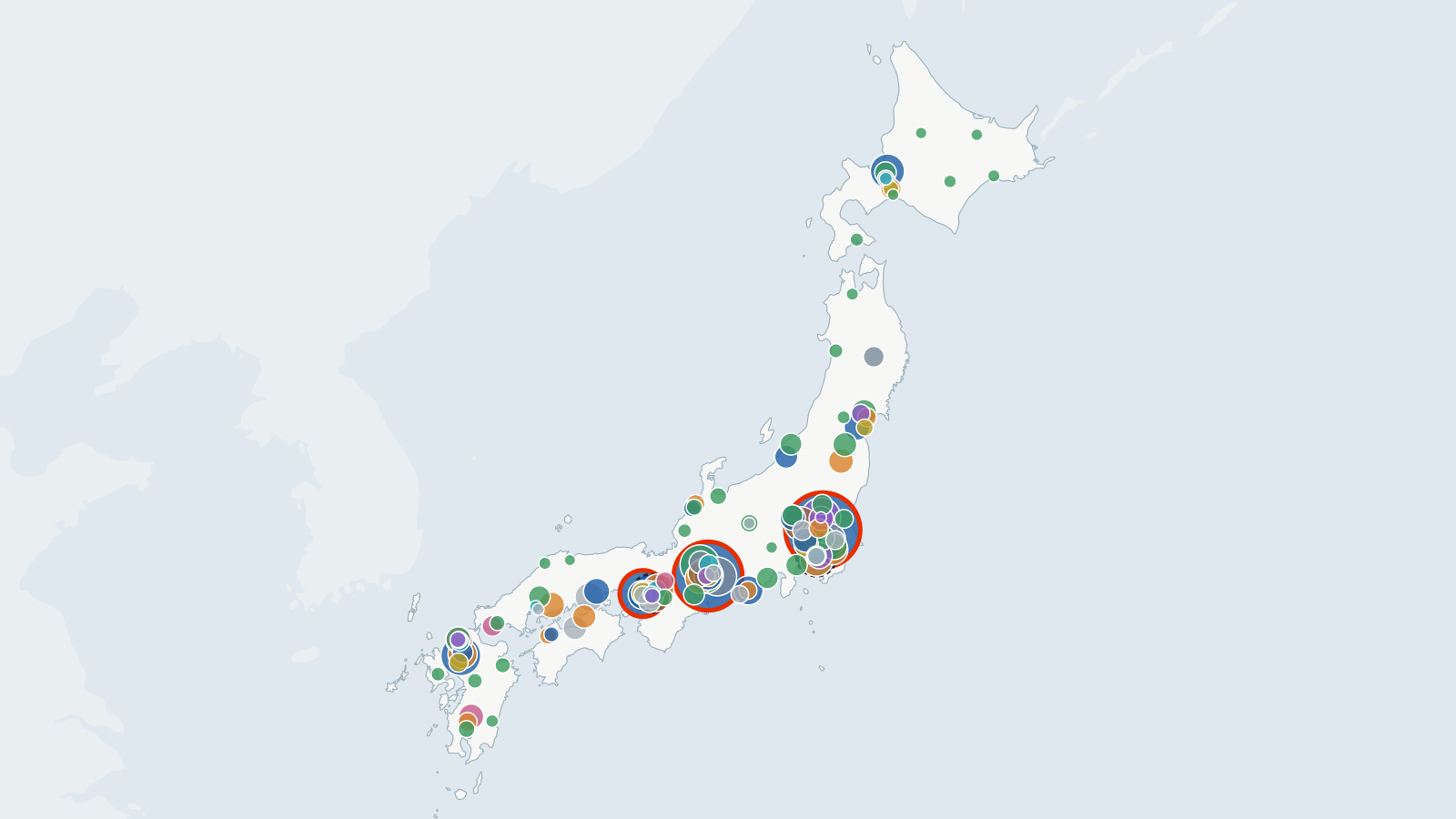 Interactive map
The Consumer Alternative: Goldmine or Money Pit?
Finally, there are the consumer sites, like Yahoo! Auctions (known in Japan as Yafuoku). It is a consumer-to-consumer site, much like eBay. There are no auction sheets and no independent inspectors. You rely entirely on the seller's honesty and a handful of photos.
Which makes it a goldmine. It is where you find heavily modified drift cars, slammed classics, and cars too old or too rusty for a proper auction. But you are buying entirely "as is". It is a big gamble, and sometimes it goes wrong.
Even then, you can't just buy from Yahoo! Auctions or Japanese dealer websites yourself. The seller expects you to speak Japanese, pay in yen and handle local logistics. You still need an exporter on the ground to negotiate, win the listing, send a flatbed truck (sekisaisha) to collect the car from a private driveway, de-register it, get the export certificate and book it onto a ship.
Why Buyers Use Smile JV
Buying a car from Japan is not a matter of pointing and clicking. It takes local knowledge, an understanding of a fragmented grading system, and someone who can handle the transport and paperwork. Knowing where to look is important. Having an experienced team on the ground is everything.
That is why buyers use Smile JV. We hold direct membership with the major auction houses in Japan, and we don't just trust a piece of paper. Our own staff inspect cars in person every week at USS Tokyo, USS Nagoya and HAA Kobe, and our partners inspect at USS Yokohama, USS JAA and USS Osaka, with photos, a short video and paint thickness checks, so you know what you are paying for before the hammer falls.
We have been doing this since 2010, handling everything from the search to booking your shipping. We deal with the bureaucracy, the inspections and the logistics, so all you have to do is wait for your keys.
Frequently Asked Questions
What is the biggest car auction group in Japan?
USS. It runs 19 venues, from USS Sapporo to USS Kyushu, and handles about 41 percent of all the cars sold at Japanese auctions. USS Tokyo alone puts up to 20,000 cars through its lanes in a single auction day.
How many car auctions are there in Japan?
There are 123 used-car auction venues, run by groups such as USS, JU, TAA, CAA and Arai. Together they handle about 145,800 cars a week, based on 2024 figures.
Can I bid at a Japanese car auction myself?
No. Auction membership needs a registered Japanese business, a second-hand goods dealer licence (Kobutsu-sho), a residence visa, space to store cars and usually a guarantor. Buyers overseas bid through an exporter.
Which Japanese car auctions have the strictest grading?
In our experience, the manufacturer-affiliated auctions: TAA (Toyota), Honda AA and NAA (Nissan). A Grade 4 at TAA tends to be a better car than a Grade 4 at some smaller independent halls.
Questions about buying and exporting from Japan? Contact us.