
Auctions · 27 Aug 2026
How Accurate Is a Japanese Auction Sheet?
We checked 304 auction sheets against the actual cars.
By Auction Man Japan
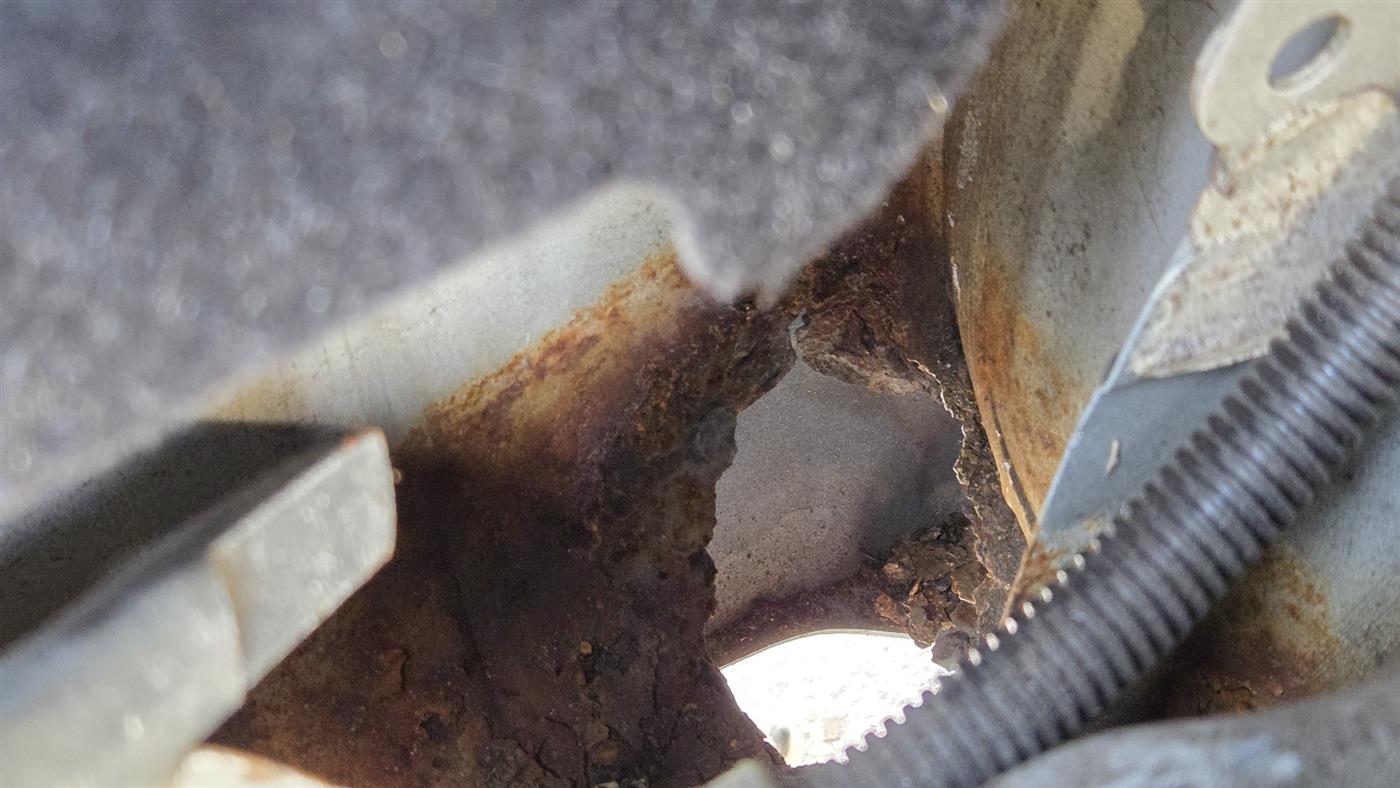
If you spend any time on export-car forums, you will have read it: the Japanese auctions under-declare problems, and you should never trust the auction sheet — especially on the older JDM cars that American and Australian buyers want.
We inspect these cars for a living. We certainly see examples of it — the photograph above is one. But we did not know how often it actually happens, and as far as we can tell, neither does anyone else. Everyone has an anecdote. Nobody has a number.
So we went and got one.
We took 304 Japanese-make vehicles aged 25 years or older that we have physically inspected, matched each one to its own auction sheet, and — to keep the analysis clean — looked at a single factor: rust. Then we compared what our inspector found underneath the car against what the sheet had declared.
The Short Answer
On rust, the auction sheet was wrong about one car in nine.
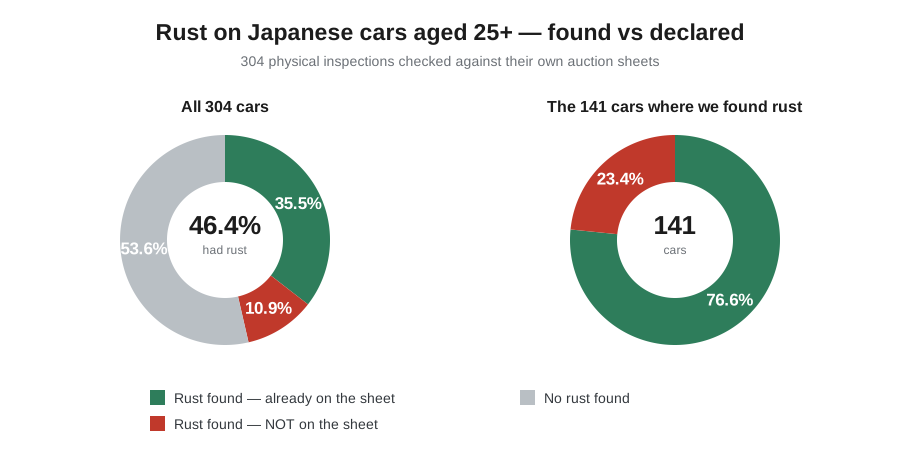
We found rust that the sheet had not declared on 10.9% of the cars we inspected. The rest of this article is about where those misses happen, and why.
How Often Do Auction Sheets Declare Rust?
We find rust or corrosion on 46.4% of these cars. Nearly half. That is not a scandal. It is what a quarter-century on Japanese roads does to a car.
The auction sheet had already declared 76.6% of it. Three times out of four, the rust we found was already on the sheet — so we knew about it before we ever got to the car.
That is worth pausing on, because it reframes what an inspection is actually for. We are not usually there to discover rust. We are there to establish how bad it is, how deep it goes, and whether a sill the sheet marks as rusty is still solid metal.
10.9% of cars had rust we found that the sheet had not declared. About one in nine — or, looked at the other way, 23.4% of the cars where we found rust.
(304 cars. Rust found on 141; undeclared on 33 of those. 95% confidence interval for the undeclared rate among cars with rust: 17.2%–31.0%.)
The Finding Nobody Expects
On 26.3% of these cars, the auction sheet declared rust and our inspector found nothing worth recording. The rust was insignificant.
That is a quarter of the fleet where the sheet was, if anything, more pessimistic than the car deserved.
Whatever else is true, these sheets are not systematically downplaying rust on old Japanese cars. They flag it liberally — sometimes more liberally than we would.
So Where Does the Undeclared Rust Hide?
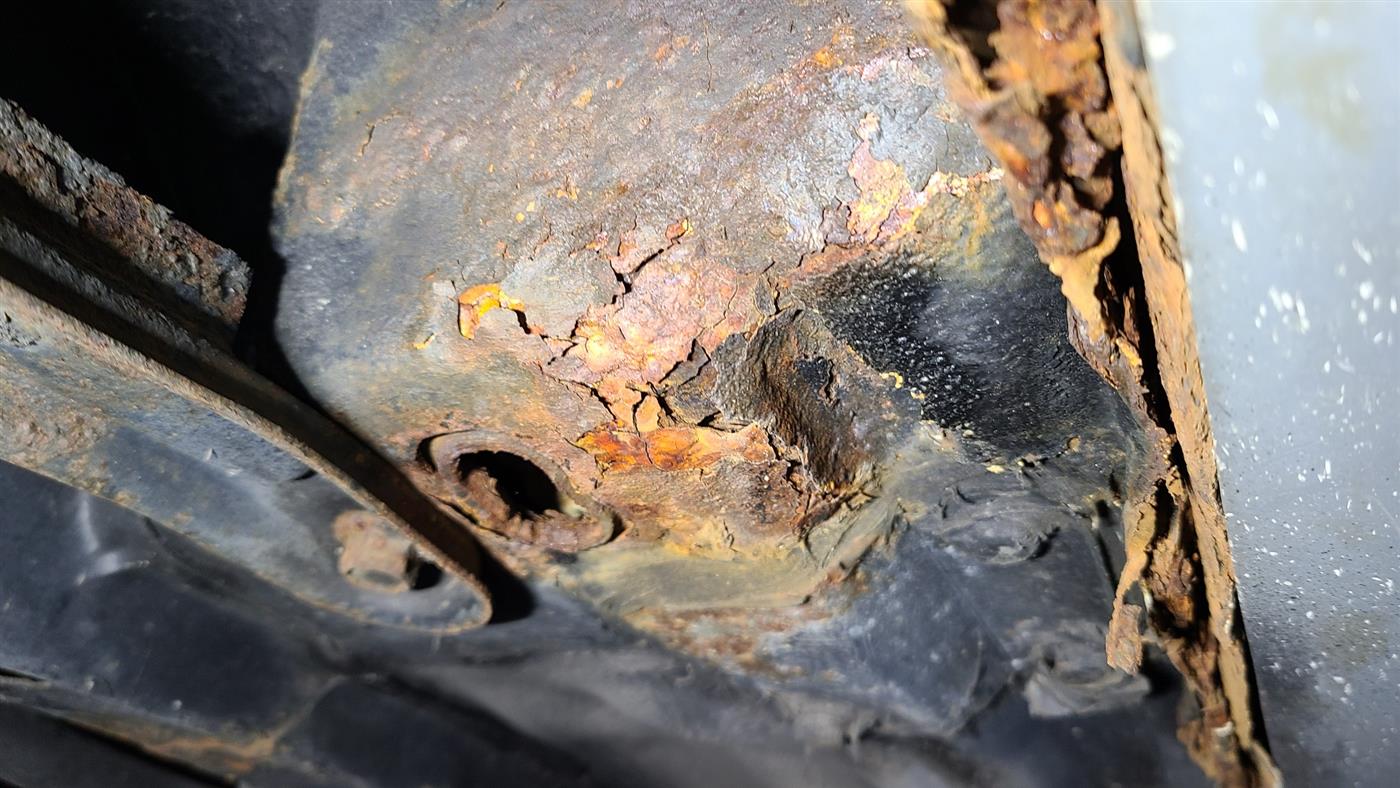
Location explains most of it. Across the Japanese cars in our archive where we recorded rot or holes:
Underbody, sills or rails
Doors
Trunk
Wheel arches
Around the glass
Locations overlap — a car can have rot in more than one place.
More than half is somewhere no quick walk-around and no standard auction photograph will ever show.
Auction sheets are produced from a visual inspection. Nobody puts the car on a hoist.
That is the honest explanation, and it is more useful to a buyer than an accusation would be. The sheet is a good record of what can be seen from beside the car. Rot along a sill or through a floor pan is simply not in that category.
One Thing That Has Changed
In roughly the last few years the auctions have begun publishing underbody photographs, and they are usually genuinely good.
This changes how we work. We can now see before bidding that some rust exists — though not how deep it goes. It also means we generally decline to inspect a car showing obvious corrosion holes in the published photos.
Which means our figures understate the problem. The 10.9% above describes cars that already passed a photographic screen. If you are bidding on something that looks rotten in the underbody photos, this study does not describe your car.
What This Means If You Are Bidding
Expect rust. Nearly half of these cars have it, and that is normal for the age.
Trust the sheet on rust, mostly. Three-quarters of what we find is already declared, and a quarter of the time the sheet is harsher than the car warrants.
The gap is depth and location, not existence. The auction sheet tells you rust is present — usually through its marks and codes on the vehicle diagram, the auction grade, and the inspector's comments. It does not tell you whether a sill is still solid or whether a floor pan has gone through. That is what a physical inspection adds — and on a 27-year-old car, it is worth having.
How We Did This, and What Could Be Wrong With It
The data. 5,735 inspection notes from January 2019 to August 2026, each matched to its auction sheet by lot number, venue and sale date. 75.6% matched. Restricting to Japanese makes aged 25 and over with a usable sheet leaves 304 cars, median age 27.
Classification was automated, using keyword and phrase matching developed with the assistance of an AI language model, applied to both our notes and the auction sheet translations. It handles negation — "I haven't seen any corrosion holes" is not counted as a finding.
We tested it. Thirty Japanese cars were drawn at random and their original auction sheet photographs read by hand, without the reader seeing what the classifier had concluded. Rust detection agreed 95.5% of the time; overall verdict agreement was 86.4%.
That blind check found a genuine bug: our rust detection had been matching stray characters in unrelated text and wrongly crediting sheets with declaring rust they had not. Fixing it moved our figures up, not down — the Japanese undeclared rate rose from 14.3% to 18.6% across all ages. We report this because a study whose errors only ever flatter its author should not be trusted.
Known limitations:
- Small sample. 304 cars. The interval on the undeclared-rust rate is wide.
- Selection. We inspect cars customers chose and paid to have inspected, and we screen out visibly rotten cars using the published underbody photos. Conservative in both directions.
- Car-level, not panel-level. A sheet declaring rust in one area counts as "declared" even where we found several.
- Rust only. This study looked at one factor. It says nothing about how accurately the sheet describes paint, repairs, mechanical condition or interior.
- Intent is invisible. Nothing here distinguishes an inspector who could not see something from one who chose not to record it.
A note on the photographs. The Altezza at the top is from our own inspection archive, and its auction sheet made no mention of rust — a genuine undeclared case, though it falls just outside the 25-year sample used for the figures above. The sill photograph is from a car in the non-runner section, included to show where this kind of damage occurs rather than as an example of a misdescribed car.
What we changed. Our own inspection notes recorded a discrepancy on only a small fraction of the cars that turned out to have undeclared findings — the inspections worked, the paperwork did not capture the comparison. Every Smile JV inspection now uses a fixed vocabulary distinguishing surface rust from corrosion from corrosion hole, plus a mandatory verdict line and an explicit tag for anything not on the sheet.
Smile JV inspects vehicles at Japanese auctions for overseas buyers. We have a commercial interest in buyers valuing physical inspection, which is part of why we have published our method, our validation results and our own errors alongside the numbers.
Frequently Asked Questions
How accurate are Japanese auction sheets about rust?
Largely accurate. Across 304 inspected cars aged 25+, the sheet had already declared 76.6% of the rust we found — and on 26.3% of cars it declared rust our inspector considered insignificant. The sheets are not systematically downplaying rust.
How common is undeclared rust on old Japanese auction cars?
We found rust the auction sheet had not declared on 10.9% of cars — about one in nine, or 23.4% of the cars that had rust at all. Most of it hides in the underbody, sills and rails, where a visual inspection cannot see.
Why do auction sheets miss rust?
Sheets are produced from a visual inspection beside the car — nobody puts it on a hoist. In our archive, 56% of recorded rot sat in the underbody, sills or rails: locations no walk-around and no standard auction photograph will ever show.
Should you expect rust on a 25-year-old Japanese car?
Yes — we find rust or corrosion on 46.4% of them, which is normal for a quarter-century on Japanese roads. The useful question is not whether rust exists but how deep it goes and whether the metal is still solid.
Do auction underbody photos replace a physical inspection?
They help — we now screen out cars showing obvious corrosion holes before bidding — but photos show that rust exists, not how deep it goes. Establishing whether a sill is still solid remains the job of a physical inspection.
Questions about buying and exporting from Japan? Contact us.