
Dealer Sourcing · 9 Jul 2026
Do You Know Who I Am? — When a Car Deal Turns Into a Shakedown
By Auction Man Japan
A note on where we were at the time
It's worth saying upfront: this happened fairly early in our move into buying directly from dealers. For a long time before that, almost everything we sourced came through the auction houses — a system that, whatever its quirks, is structured, anonymous, and largely protects you. You bid, you win, the car is graded by a third party, the money flows through the auction, and you rarely speak to the seller. There's very little room for a personality to get in the way.
Dealing dealer-to-dealer is a completely different game. Suddenly you're sitting across a table from someone, exchanging business cards, reading body language, and negotiating face to face — and the deal lives or dies on the relationship as much as the car. We were still fresh to that world. We hadn't yet developed the instincts you only get from being burned a few times: when to walk, when a "small request" is actually the first step of a squeeze, and how to tell the difference between a hard negotiator and someone you simply shouldn't get into business with. Looking back, the signs were there from the first meeting. We just didn't yet have the experience to read them for what they were.
That's really the point of writing this up. Everything that follows is the kind of lesson the auction halls never teach you — and the kind we wish someone had spelled out for us before we made that first trip.
The Car That Started It
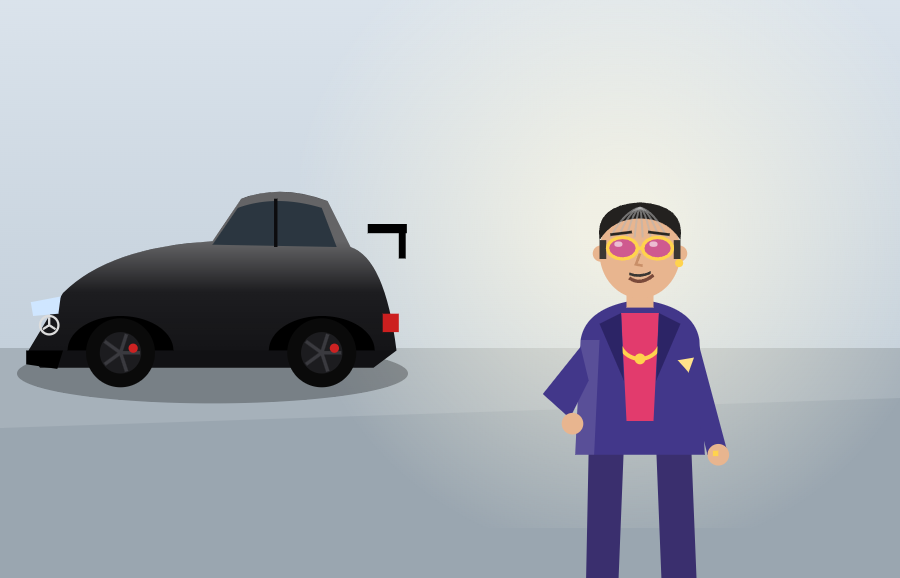
The car was a rare, low-production AMG Mercedes — a genuinely special thing, the kind of car that justifies a long trip and a lot of patience. On paper it was one of our more lucrative deals, and that mattered. We knew, even going in, that the seller had a certain reputation and a certain manner. But the prize was big enough that we talked ourselves past the doubts. That's worth being honest about: we saw the character type and pressed on anyway, because the numbers were good.
The Inspection
To inspect it properly I travelled from Osaka up to Tokyo. Before I ever got near the car, there was the "chit chat" — sat down across a table, the expected exchange of business cards. That first ritual is where I made an early mistake: I don't think I had a card to offer, which in Japan is close to a cardinal sin and sets the wrong tone from the very first minute.
What followed wasn't really small talk. It was a gentle, smiling interrogation — where do you live, questions about my family, how long have you been in Japan, how did you get here, do you go to USS Tokyo… you catch the 7 o'clock bus in the morning? Threaded through it were little remarks about my poor Japanese, the kind of comments that sit somewhere between a joke and a warning. At the time it felt like nosiness. In hindsight it was a man taking my measure and quietly letting me know how much he'd worked out about me.
When it was finally time to see the car, a young, buffed-up "staff member" brought it round in a cheap, old van. He had the look of a bodyguard, not a car salesman. Strange, for a business with expensive supercars on the books. I was driven to a secure, all-but-invisible underground car park: a concrete bunker with around twenty cars under covers. It was an unsettling place to find yourself in an area you didn't know well.
Then came the friction over a perfectly normal inspection. When I started taking photos and running paint-thickness tests — completely standard due diligence — he became agitated and at first refused to allow it. Only after explaining that my client absolutely insisted on thickness checks was I allowed to photograph the paint-thickness tester itself. Once the client gave the go-ahead to buy the car, he immediately demanded a ¥500,000 cash deposit on the spot. I declined — politely — and instead paid the deposit by bank transfer there and then, on a laptop. That refusal to hand over cash turned out to be one of the better instincts I had that day.
The Shakedown
The deal was agreed. The balance was due, and we'd agreed to settle it within three weeks — which we did, exactly as arranged. Where we fell short was communication: we didn't give him constant progress updates along the way. With hindsight that's a fair criticism, and maybe we should have kept him in the loop more. But the money was never late. It was paid on the terms we'd agreed.
That distinction didn't matter to him. The emails turned hostile. Storage fees appeared from nowhere. And then it escalated past paperwork: he rang one of our staff, after payment — the "do you know who I am" routine — and demanded another ¥1–2 million on top of an agreed, completed deal. He left her in tears. Around the same time, a police officer turned up at my home asking who lived there and for details about my family. I genuinely believe it was a coincidence, but the timing was frightening. I declined to answer and asked them to come back when my wife — whose Japanese is far better — was home.
How It Ended
In the end, two things defused it. First, I told my Japanese staff member to block his number and I dealt with the man myself from then on. No member of staff should be left to absorb that kind of pressure. Second — and there's a strange irony here — the language barrier became a kind of armour. My poor Japanese and his poor English meant the intimidation simply couldn't land the way it was meant to. The menace needs a shared language to work, and we didn't have one. The deal was already done on our side; everything he was doing was an attempt to reopen a closed agreement, and we simply didn't let him.
We've since learned this isn't unique to us. Other exporters we know have had versions of the same experience. It's a known hazard of stepping outside the auction system and dealing with certain individuals directly.
What We Took From It
The real legacy of this deal isn't a war story — it's a system. Experiences like this one are exactly why we now have a very set protocol for how we approach any new dealer, and why there's a great deal of work happening behind the scenes before we ever commit to buying a car.
It starts on the very first phone call. We work through a deliberate set of questions, asked in a particular way, and a lot of what we're really doing is watching how the dealer reacts. The answers matter, but so does the manner — evasiveness, irritation at reasonable questions, or pressure to move faster than is sensible all tell us something. That first call is as much an assessment of the person as it is of the car.
Alongside that sits an extensive due-diligence process. We research the dealer online, cross-check their corporate and tax registrations, verify their tax number, and confirm their dealership licence number against the official records and listings where it should appear. We want to know that the business is exactly who and what it claims to be before any money is discussed. (The full legal picture behind those checks is in what it takes to export safely, and the patterns we watch for in what 140+ dealer inquiries taught us.)
We also keep meticulous records of the exact individuals we deal with — full, correct names tied to each transaction. That isn't just good practice; recording precise individual and dealer details is part of what's required of us under our used-car dealer's licence here in Japan, and we treat those obligations seriously.
None of this is quick, and that's the point. A single inquiry can involve hours of background work long before an inspection is even booked. It's unglamorous, careful, document-heavy work — and it's precisely the discipline that early deals like this one taught us we couldn't do without.
The Honest Conclusion
None of this is to paint a whole industry with one brush — the overwhelming majority of dealers we work with are straight, professional, and a pleasure to deal with. But early on, before we'd built up the instincts, we didn't have a reliable way to tell the difference. This was one of the deals that taught us. We came out of it with the car delivered, the client happy, and a much sharper sense of when to walk away. Expensive lessons, but lessons all the same — and exactly the kind the auction halls never prepare you for.
Frequently Asked Questions
What are the warning signs of a difficult Japanese car dealer?
Personal questions that map your life rather than small talk, refusal of standard inspection steps such as paint-thickness tests, demands for cash deposits on the spot, and pressure after the deal is agreed. How a dealer reacts to reasonable questions tells you as much as the answers.
How does Smile JV vet a new dealer before buying?
A deliberate first-call question set, online research, cross-checks of corporate and tax registrations, verification of the dealership licence number against official records, and meticulous records of the exact individuals involved — hours of background work before any inspection is booked.
Is buying through Japanese auctions safer than buying from dealers?
The auction system is structured and largely anonymous: third-party grading, money through the auction house, little room for personality. Dealer deals live or die on the relationship — most dealers are professional, but the exceptions are why the vetting protocol exists.
Questions about buying and exporting from Japan? Contact us.